
First Tech Challenge · FASNY · Est. 2024

MANTABOTS

Designing · Building · Programming · Inspiring

FTC Team #27318 French-American School of NY Season 2025-26 · Decode
Who we are

Built on Curiosity.
Driven by Innovation.

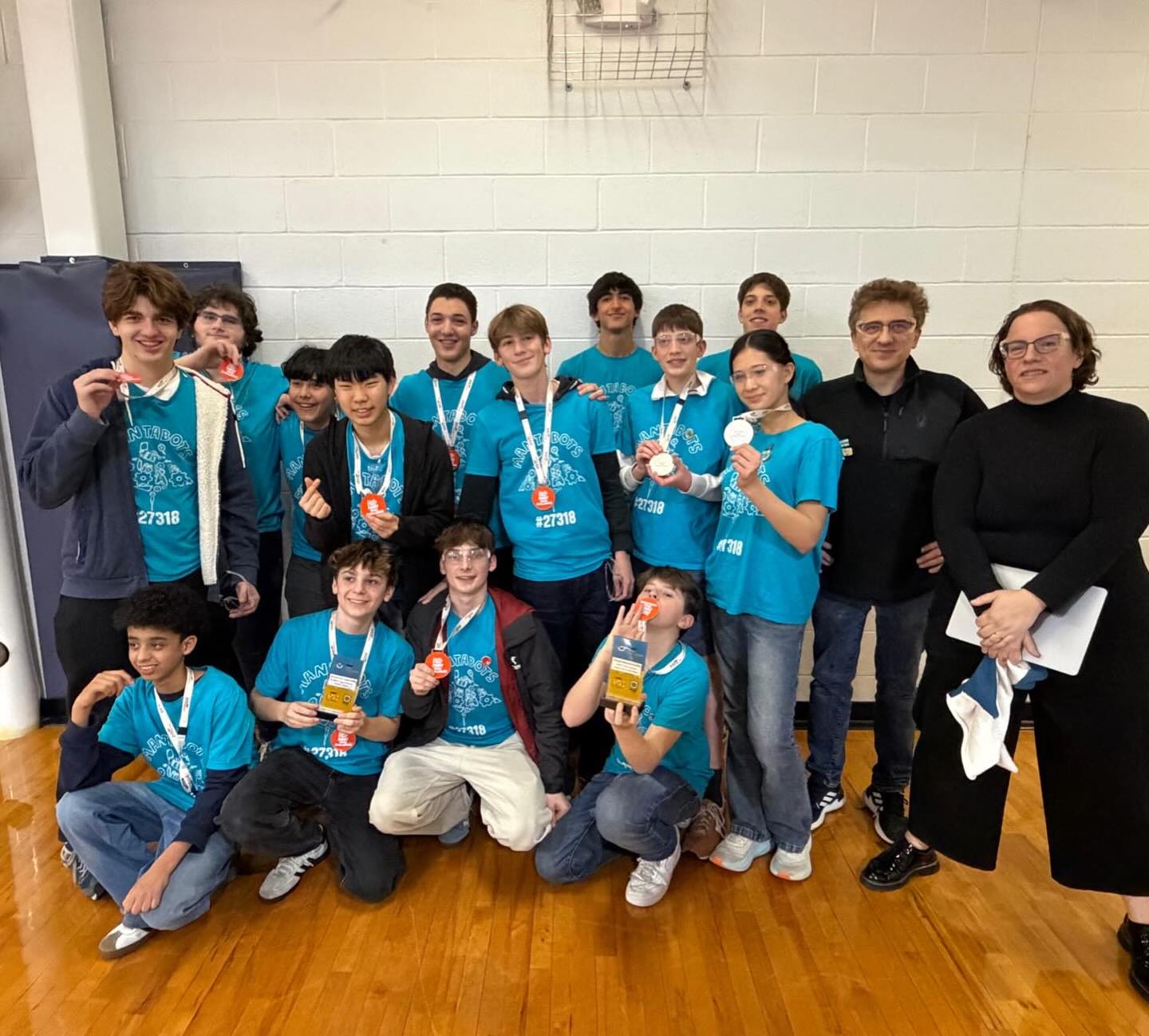
We are the MantaBots #27318, a First Tech Challenge team from FASNY, the French American School of New York, based in Mamaroneck in the Excelsior region of New York.

We are a second-year team composed of 14 enthusiastic, hard-working members. To organize our big team, we split into three general groups: Outreach, Software, and Hardware. Each one of us can move around within these groups, so everyone can find and develop their strengths and grow into leadership roles.

2nd
Year in FTC
14
Team Members
NY
Excelsior Region
Java
Programming Language
Our journey

From LEGO Bricks
to Metal Frames

FLL

Green Brick Road, FIRST LEGO League

We started our journey in 2021 as a group of 5th and 6th graders with a passion for building and innovation. We joined the First Lego League and named ourselves the Green Brick Road, highlighting our hope to continue building, coding, and doing outreach throughout the rest of our school years.

FTC

Becoming the MantaBots, FIRST Tech Challenge

When we hit high school, we became an FTC team and named ourselves the MantaBots to honor our mentor team, the Sharkbots #14903. They helped us along in our first year, and although they are no longer in FTC, the impact they left has given us a passion for sharing our dedication to robotics with our community. Our coaches, Damien Boudialez and Nadege Lemperiere, showed us how to do everything, and we owe them everything we have worked together to build.

NOW

Season 2025-26, Decode

During the summer, we focused on improving aspects of our robot that we were unable to address as a first-year team, whether in coding or building. Now in our second year, we are pushing further than ever with new systems and a refined approach to every aspect of competition.
Competition seasons

Our Seasons

2025 - 2026

Decode

Our second FTC season. Building on everything we learned in Into the Deep, we are competing with Raymond Junior V3; a refined robot featuring a Limelight camera system, an auto-aligning turret, and a fully redesigned intake and outtake.

Current Season
2024 - 2025

Into the Deep

Our first season as an FTC team. We built, programmed, and competed with our debut robot, learning the ropes of FTC competition and laying the foundation for everything that followed.

Completed
RAYMOND JUNIOR V3
Engineering

Meet Raymond Junior V3

Raymond Junior V3 is the result of two years of iteration, calculation, and competition experience. Every subsystem was designed to be fast, reliable, and precise; from intake to outtake.

INTAKE

Mecanum Intake

A row of mecanum wheels allows us to reliably intake artifacts with no risk of accidentally expelling the balls, while guiding them to our transfer and getting them ready to be sent up the ramp.

RAMP

Powered Ramp

A combination of powered surgical tubing and small wheels funnels the balls through the robot quickly and efficiently, allowing for fast and reliable transitions between intake and outtake.

VISION

Limelight Tracking

A forward-facing Limelight camera tracks goal-mounted AprilTags to automatically align the turret with the goal. Working in tandem with a Pinpoint IMU, this lets drivers control the robot without needing to track turret orientation.

OUTTAKE

Rotating Turret

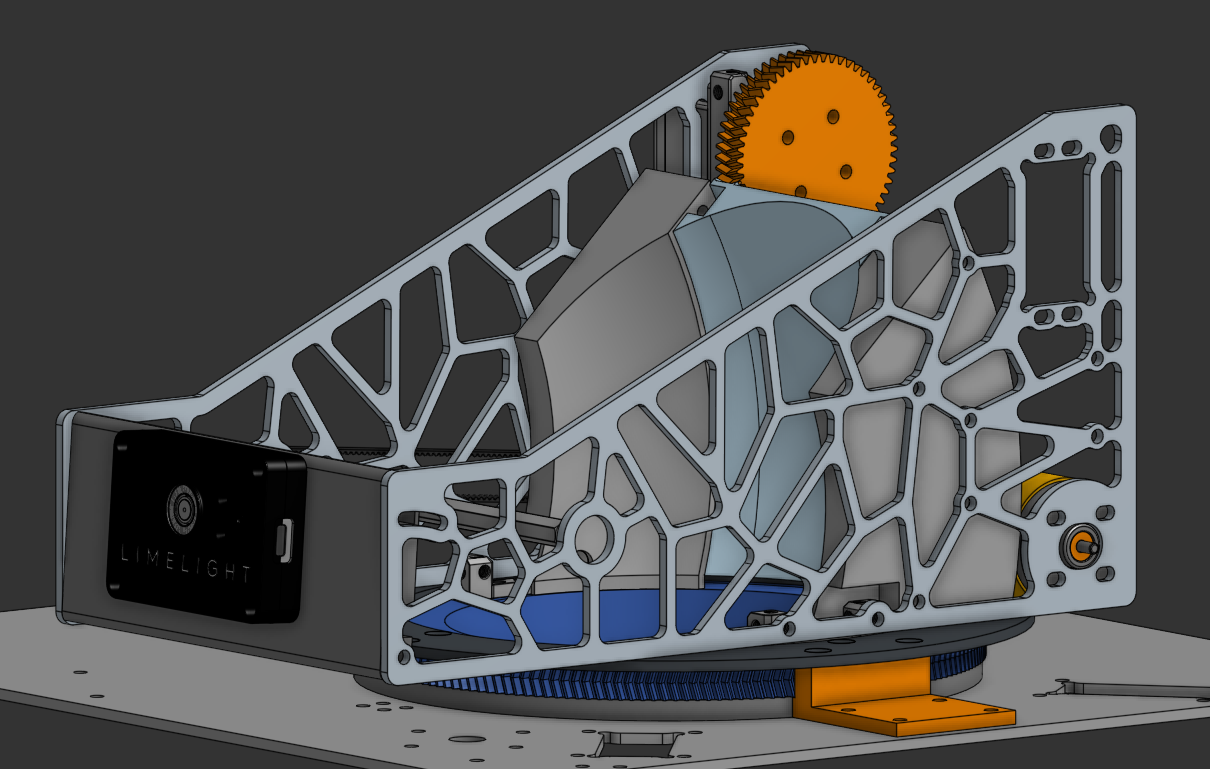
Our turret features an adjustable launch angle with 40 degrees of range and can rotate 180 degrees, giving us ideal shot flexibility during the robot game and guaranteeing the ability to shoot from anywhere on the field.

Software

How We Code

Our codebase is written in Java using the FTC SDK. We use Git for version control, keeping our development organized across the whole team.

This season, our biggest software achievement is our auto-alignment system. The Limelight camera detects AprilTags on the goal and feeds position data to our turret controller, which automatically rotates to the correct heading. Combined with a Pinpoint IMU for field-centric orientation, our drivers can focus entirely on strategy rather than manual aiming.

We also wrote fully autonomous routines that handle intake, positioning, and shooting without any driver input; maximizing our score during the autonomous period.

Java
Primary Language
FTC
SDK
Git
Version Control
Auto
Autonomous Routines
Engineering Analysis

The Math Behind
the Robot

Before building the robot, we completed calculations for the range of optimal launch angles for our turret, ideal wheel speeds, required motor RPMs, and accurate shots from different field positions.

We organized everything into a Google spreadsheet. We only need to enter the horizontal and vertical distance from the goal, the height difference from our shooter to the goal, and the wheel diameter; and the spreadsheet instantly outputs the ideal launch angle, required velocity, and motor RPM.

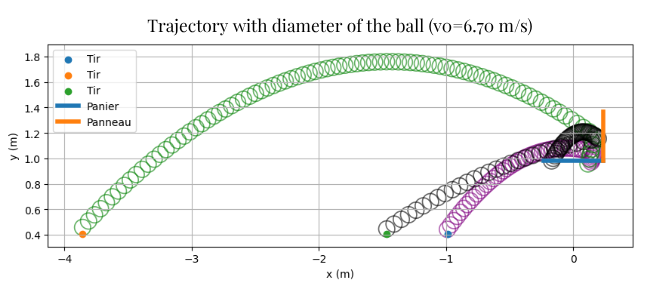
We also coded a custom simulation of the ball's trajectory from different distances with varying angles to optimize the angle range of our hood. The simulation accounts for the rebound off the backboard of the goal to maximize accuracy.

Ball trajectory simulation graph
Community

Giving Back

Outreach is at the core of what we do. From STEM events to international programs, we work to share our passion for robotics with as many people as possible.

"We mentored 11 underprivileged orphaned children in Lebanon through a 2-week UNICEF robotics program, teaching fundamentals of coding and building with Micro:bits and TPBots."

We run stands at STEM events including StemTastic and the Tristate Expo, as well as school events like the HS Assembly, Open House, and Fun Run. We also run STEM Summer Camps at the Carver Center.

We coach three FLL teams at Hommocks Middle School, going twice a week for two hours, helping with coding, building, and their innovation projects. Our teams achieved first place at their qualifier and qualified for the Troy Championships. After the season ended, we continued mentoring by introducing 30 new kids to FLL; from motors to line following.

Two of our members also went to the STEMtastic headquarters to build and test starter LEGO robots for a county STEM summer event. Their feedback helped the STEM Alliance identify and solve organizational and supply challenges.

What's Next

Building the
Future Robot

This season, we are making enhancements across our mechanical design, fabrication, and software after reflecting on where we fell short in previous competitions. On the mechanical side, we are switching to a parallel plate chassis to reduce wasted space and redesigning our turret for faster, more accurate targeting.

On the fabrication side, we are using our in-house CNC machine to cut custom parts with tighter tolerances, improving the robot's overall durability. Combined with refined autonomous routines and better shot accuracy during teleop, we are confident these upgrades will make our robot more consistent and reliable on the field.

Future turret panels
Concept Image 2 · Drop image here
Concept Image 3 · Drop image here
CHASSIS

Custom Chassis

Upgrading to a parallel plate design to reduce wasted space and improve structural compactness.

TURRET

Increased Speed & Accuracy

Redesigning for better range of motion and faster, more accurate targeting during matches.

FABRICATION

More CNC Parts

Using our CNC machine to cut custom plates and panels for tighter tolerances and a sturdier build.

SOFTWARE

Enhanced Autonomy

Refining movement calibration and shot accuracy across both autonomous and teleop stages.

Get in touch

Say Hello

Have questions, want to collaborate, or just want to follow our journey? Reach out; we would love to hear from you.

mantabots@gmail.com